
Nonfiction
January 4-29, 2016
Open to All
Tiered Tuition
Reserve My Spot This offering is not currently available for registration. Please check back or email Jennifer Jean at jjean@fawc.org for any questions.
About the Offering
Memoir can be as various, wild, and eclectic as the individual putting their life down on paper. In this class, you will be guided through a series of excercises to learn how to extend both the anecdote and the essay forms into something more substantiated: a memoir that reads both as revelation and as literature.
It’s become an almost unmovable piece popular literary culture to make a clear distinction in a memoir between what’s true and what’s made up. But memoir—the form itself—can be as various, wild and eclectic as the individual putting their life down on paper. Anything goes, if it can move the reader. And truth, I feel, is relative when talking about art. That said, of course there are many ways of negotiating that truth in writing the essay or its longer form, the memoir. It’s all in the art, you don’t get credit for living, V.S. Pritchett has said, and so the goal of any autobiographical writing is to raise the stakes in conveying the experience of life and the life of experience.
In this class we will look at our own writing, do some exercises, and read some pages from great writers of great memoirs (“Running in the Family” by Michael Ondaatje and “Wild” by Cheryl Strayed, “The Guardians” by Sarah Manguso and others), some great essayists (Charles D’Ambrosio, Dennis Cooper and Leslie Jamison and others) and begin the conversation about how to extend both the anecdote and the essay forms into something more sustained: a memoir that reads both as revelation and as literature.
About the Instructor/Moderator
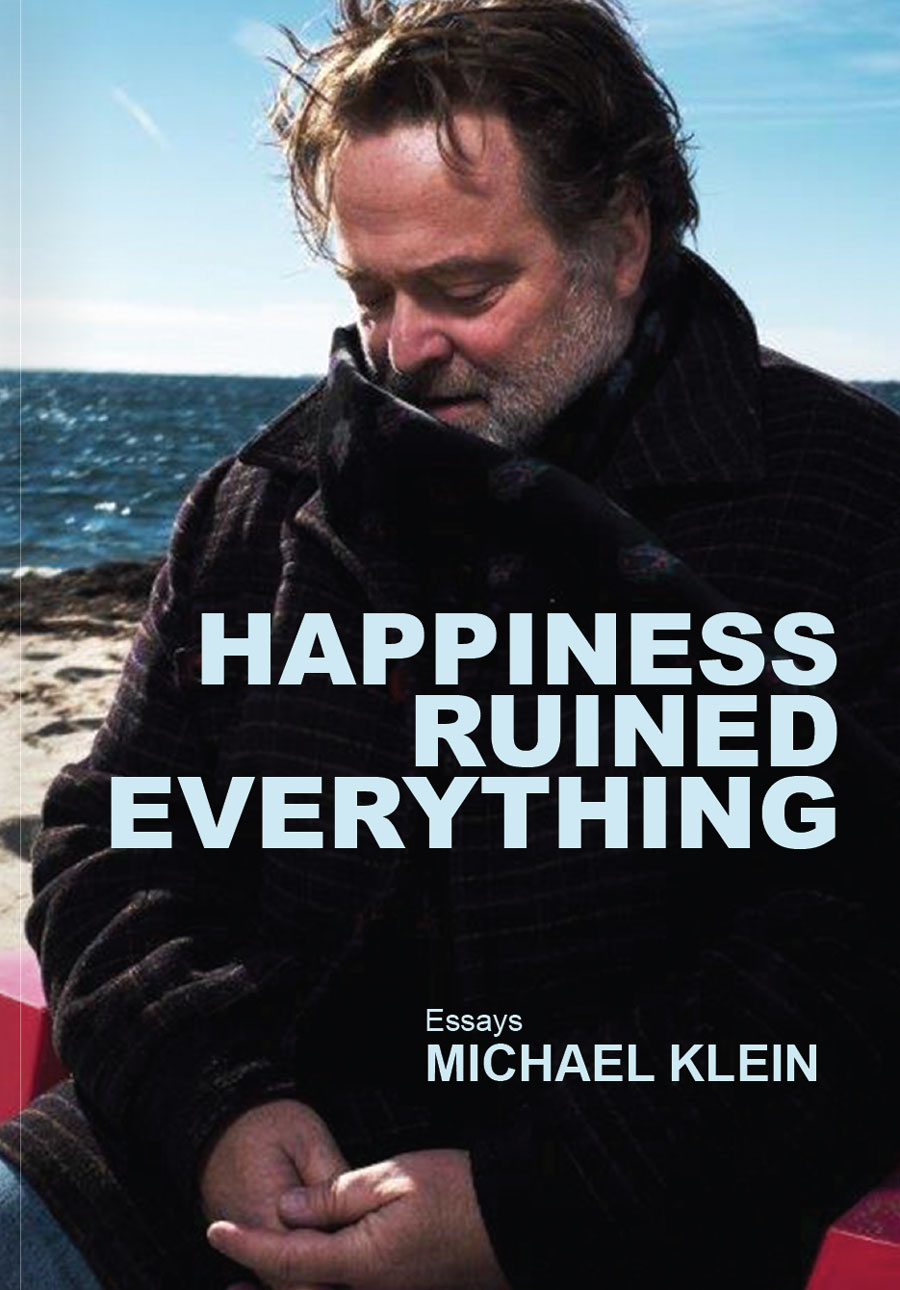
Michael Klein has written five books of poetry, including, The Early Minutes of Without: New & Selected Poems. His new book, Happiness Ruined Everything: Essays has just been published by Galileo Press. He is a five-time finalist and two-time winner of the Lambda Literary Award in poetry, for his first book, 1990, and for editing the seminal anthology, Poets for Life: 76 Poets Respond to AIDS. He is also the author of two books of autobiography, Track Conditions, a memoir about his time on the racetrack, and The End of Being Known, essays on sex and friendship. His work has appeared in POETRY, Paris Review, American Poetry Review, Tin House, Bennington Review, FENCE, LA Review of Books, Poets & Writers and many other publications. He has taught writing at Sarah Lawrence College, Binghamton University, Hunter College, the Fine Arts Work Center Summer and for more than 20 years, as part of the MFA-in-Writing faculty at Goddard College. He currently works as a consultant and editor for people working on memoirs and poetry manuscripts.
View all offerings


