To join us virtually, visit our YouTube Channel and look for the “Upcoming live streams” section. The majority of our public events are available via YouTube live stream with the presenters’ permission.
About Our Speakers
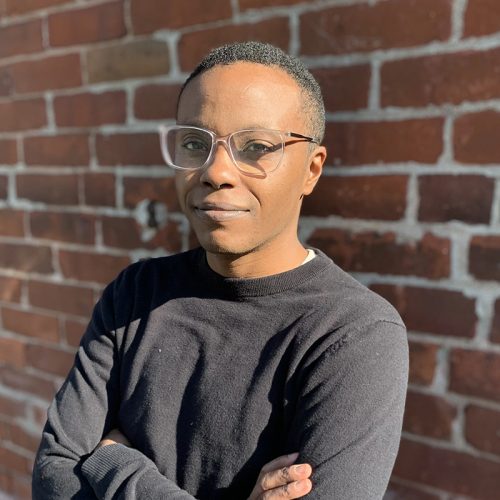
Cameron Awkward-Rich is the author of three collections of poetry, most recently is the author of three collections of poetry, most recently An Optimism (Persea Books, 2025), as well as The Terrible We: Thinking with Trans Maladjustment (Duke University Press, 2022). His writing has been supported by fellowships from Cave Canem, the Lannan Foundation, and the ACLS. Presently, he is an associate professor in Women, Gender, Sexuality Studies at the University of Massachusetts Amherst.
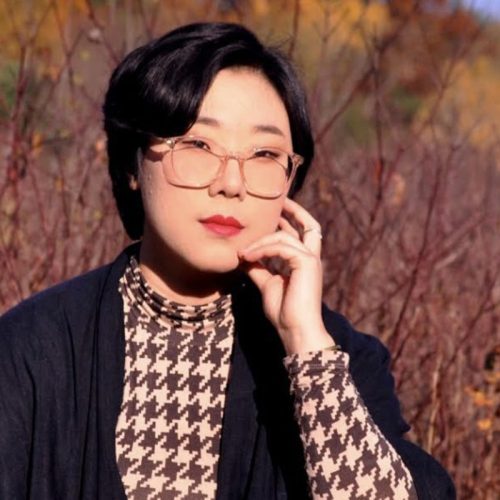
Franny Choi is a poet and essayist. Their books include The World Keeps Ending, and the World Goes On (Ecco, 2022), a finalist for the Kingsley Tufts Poetry Award; Soft Science (Alice James Books, 2019), winner of the Elgin Award for Science Fiction Poetry; and Floating, Brilliant, Gone (Write Bloody Publishing, 2014). Choi’s writing has appeared in TheNew York Times, The Atlantic, Paris Review, and elsewhere. They co-edited the anthology We the Gathered Heat: Asian American and Pacific Islander Poetry, Performance, and Spoken Word alongside Terisa Siagatonu, Noʻu Revilla, and Bao Phi. Franny is a member of the Literature Faculty at Bennington College and the founder of Brew & Forge. Their gayest honor to date is “Poet Laureate of Northampton, MA.” Choi’s first essay collection, forthcoming from Ecco Press, is sort of about robots, but mostly about being queer, Asian, and alive.
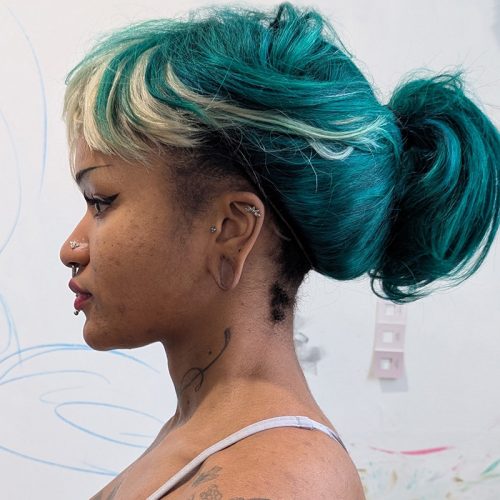
Autumn Wallace (b. 1996, Philadelphia, PA) graduated from Tyler School of Art at Temple University in 2018. Wallace is a cross-disciplinary artist whose work examines myth, gender, sexuality and the Black-femme experience. Their work draws on a diverse range of material and research including early 90’s cartoons, Byzantine aesthetics, “low-quality adult materials”, anthropology and zoology, crafting unique stories and characters which reoccur and evolve throughout their practice. Through this eclectic methodology, Wallace creates alternative narratives which facilitate entryways for excluded voices.